
Cape May Greenways

Cape May County Trails and Byways

The Cape May area has miles of scenic trails and byways that run through forests, farmland, state and county parks, wildlife management areas, historic towns, and dunes of preserved beaches. Birds and other wildlife abound. In fact, the Cape May peninsula is one of the top birding spots in North America!

Cape May Point State Park

Speaking of top birding spots, Cape May Point State Park is a major migratory route, especially in the spring, when many sea and shorebirds come through. At the end of the summer, dragonflies and monarch butterflies can be seen as they make their way across the Delaware Bay.

Three blazed trails will lead you through a variety of habitats in the park. On the wheelchair- accessible Red Trail, viewing platforms overlook ponds where wading birds, ducks, swans and sometimes even osprey come to feed and breed. The Yellow Trail is 1.5 miles long with views of wetland marsh and coastal dunes. The Blue Trail is the longest of the three.
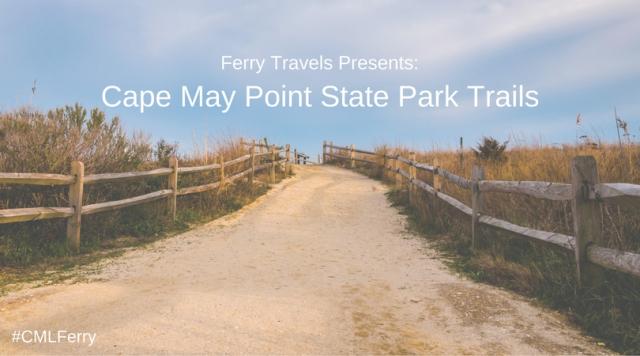
Image
Image of the entrance to a beach in Cape May, NJ

In Cape May Point State Park, you’ll also find a historic 157-foot lighthouse. Built-in 1859, with 199 steps you can climb to the top to take in a view of the Delaware Bay and surround area. As a reminder of its days as a military base, the park also has a bunker. It now stands as a monument to the strategic defensive role the area played during World War II, and at low tide, you can still see the gun turrets.

Cape May County Park & Zoo

At the more than 200 acre Cape May County Park, you’ll discover a zoo that’s home to more than 500 animals representing 250 different species, and admission is free! There are miles of walking trails and a park with playgrounds for children.

Cape May National Wildlife Refuge

At the Cape May National Wildlife Refuge, broken out into three different units throughout Cape May County, a wide variety of habitats and species can be seen. At the Two Mile Beach Unit in Wildwood Crest, free family nature walks are available on Saturdays throughout the summer.

Higbee Beach Wildlife Management Area

Birding is always excellent at Higbee Beach Wildlife Management Area, especially from spring through early fall. In spring, when they are heading north, birds will rest and feed there after crossing the Delaware Bay. In summer, a number of species come to breed.  Because of this, pets are not permitted on the beach from April until September. This is also a great place to see dragonflies and butterflies, including monarchs. Higbee has more than two miles of nature trails with viewing platforms.
Image
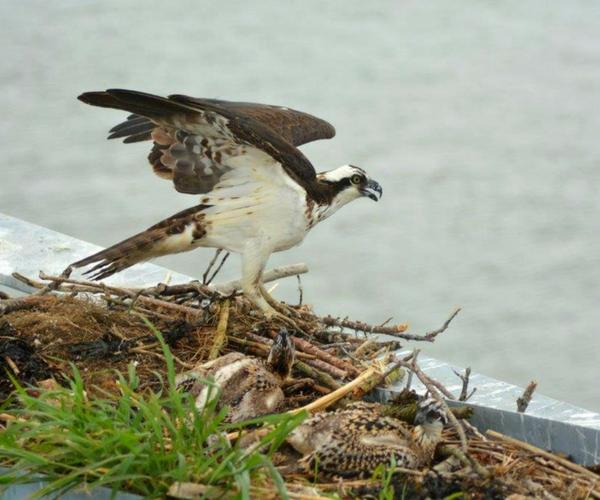
Ferry Osprey

For fishing enthusiasts, Cape May State Park waters are home to weakfish, bluefish, flounder, tautog, and striped bass.

For more information and an interactive map of Cape May Trails and Greenways, visit the Cape May, New Jersey page on TrailLink.

Check Out The Latest Edition of the Twin Capes Traveller!

Wildflowers Near the Ferry

NJ Wildflowers Welcome Ferry Visitors

If you think flower season is limited to just the spring and summer, then you haven’t treated yourself to a fall ride down the Garden State Parkway. Whether you’re arriving at the Ferry from parts north, or leaving after traveling from the South, you’ll be welcomed by fields of purple and pink wildflowers throughout Cape May County on the Parkway.

In October, when many states farther north are deep into leaves changing, South Jersey is still treating visitors to the joys of blooming flowers.  Here are a 5 things you may not know about wildflowers on the Parkway:

  1. The nation has Lady Bird Johnson to thank for the proliferation of wildflowers throughout the country. Lady Bird, who served as the country’s first lady from November 1963 – January 1969, made beautification of cities and highways one of her key initiatives. The Highway Beautification Act of 1965 was nicknamed Lady Bird’s bill.
  2. The Garden State Parkway is so called because unlike many highways it was designed as a landscaped thoroughfare. Even as one of the busiest toll roads in the country, it is known for its wide green spaces particularly in South Jersey and robust assortment of deciduous and evergreen trees.
  3. The wildflowers displayed on the Parkway in the spring and fall can be purchased at gspwildflowers.com/shop in 1/4 pound bags for personal plantings around homes and offices.
  4. Wildflowers are not only easy on the eyes, but provide havens for birds, butterflies and pollinating insects.
  5. Fall wildflowers on the GSP are pink, but if you come in the spring, the assortment tends toward yellow and orange. In fact, Hammond’s yellow spring beauties are a type of wildflower only found in New Jersey!

Red Knots & Horseshoe Crabs | Delaware Bay Migration Spectacle

Experience Amazing Wildlife On the Delaware Bay

The Delaware Bay is a birdwatcher’s paradise, and the decks of the Cape May-Lewes Ferry provide some of the best viewing opportunities around. And, just beyond the decks of the Ferry, up the coast from the Cape May Terminal, one of the most amazing happenings in the birdwatching world takes place each spring.

Red Knots

Have you ever heard of a Red Knot? No, we’re not talking about pulling apart a Twizzler and tying it, as much fun and as delicious as that might be. We’re talking about the Red Knot, a migratory shorebird that travels over 9,000 miles annually between South America and their breeding grounds in the Arctic. If you’re wondering, 9,000 miles is roughly the equivalent of 529 trips across the Delaware Bay between Cape May and Lewes.

Beyond their aptitude for long-distance travel, the shores of the Delaware Bay here in New Jersey play an important role in the Red Knots’ migration. And the reason is something you might not expect: Horseshoe Crabs.

Red Knots & Horseshoe Crabs

Horseshoe crabs? What do those pre-historic looking creatures have to do with a 9,000 mile Red Knot migration? Great question! The Nature Conservancy does a great job of explaining it in detail here, but the cliff notes version is that during May and June each year, Horseshoe crabs spawn along the coastline of the Delaware Bay, and because the timing coincides with their migration, hundreds of thousands of Red Knots show up to stuff themselves on an all-they-can-eat buffet of horseshoe crab eggs. The feast allows them to refuel, and provides them with the energy they need to continue on their journey up to their breeding grounds in the Artic.

This stop on their migration only happens here on the shores of the Delaware Bay, so if nature is your thing, make sure to add this to your bucket-list this spring!

To book your Ferry travel to see the Red Knot migration, click here.

You might also be interested in:

 
DOLPHINS & WHALES

OH THE THINGS YOU'LL SEE

Check Out The Latest Edition of the Twin Capes Traveller!

Search in CMLF

Cape May Lewes Ferry

Subscribe to our newsletter

Booking Form