Where to View Fall Foliage in NJ and DE

Peep This! A Guide to Find South Jersey & Delaware's Best Fall Foliage

The leaves, they are a changin’! Or at least, they’re about to be. If you’re interested in feasting your eyes on the cavalcade of changing colors, you don’t have to drive all the way to New England to see them. In fact, there are several great options for fall foliage viewing on both sides of the Delaware Bay, and the Cape May – Lewes Ferry can connect you to them! We’ve pulled together a few easily accessible, self-driving options that you can turn into day trips, or use as the start of a weekend leaf peeping adventure.

New Jersey

When you depart the Ferry in Cape May, there are several driving options to find the start of this tour, which takes you through beautiful Belleplain State Forest (make sure to stop at picturesque Lake Nummy), out into the historic farmlands and open spaces of Cumberland County, and back down to Cape May.

From the Ferry terminal, you can head up the Garden State Parkway (which features some great foliage of its own) to exit 20, where you’ll exit on the left onto Route 50. Take Route 50 until it intersects with Route 49 in Tuckahoe, and pick up the trail below from there. Or, from the Ferry terminal, turn left on Bayshore Road and follow it along the Bay until it connects with Route 47, then wind your way up the western edge of Cape May County until you pick up the tour in Port Elizabeth.

Want to extend your tour or see more of the state? For more ideas on NJ fall foliage tours, check out the list Visit NJ has put together.

Delaware

From the lush wooded hills of the northern part of the state to the breezy stretches of coastline, there are plenty of options for leaf peeping in Delaware. Start with a quick tour featuring plenty of great foliage, by traveling the Historic Lewes Byway.

The byway takes you through Cape Henlopen State Park and into historic Lewes, where in addition to great foliage, you can catch a glimpse of the area’s 380 plus year history. The 12+ mile tour takes about an hour, so plan to add in some shopping, dining or exploring while you’re there.

Or, extend the tour by heading out to the Nanticoke Heritage Byway. The near-40 mile route takes you through western Sussex County, winding through farmlands, wooded areas and quaint small towns.


Street Rods and Ferry Rides

Out For a Ride

Bird watching and being on the lookout for marine wildlife is fun to do on the Ferry, but sometimes, you may catch a glimpse of a more retro type of bird; like a Firebird or something that looks like it was driven by the T-Birds themselves.

While we welcome cars and vehicles of all kinds throughout the year, it is always refreshing to welcome older and exciting cars aboard. A spike in cars that catch our eye usually occurs the week before and after car shows on either side of the bay—using the Ferry to get to and from their event.

Jersey Cape Cruisers

Locals from Cape May, these three friends headed over the bay to once again attend the 29th annual Rod and Custom Jamboree as hosted by the Southern Delaware Street Rod Association in Harrington, Delaware. Check out these bright flashes of colors and their story!

Image
Judy Hoyle and her Ford Custom

’52 Ford Custom

Upon meeting Judy Hoyle, we were convinced that she must have painted this car pink. However, she insisted it was always that way. What the Lower Township resident meant though, was that it was always that way when she had purchased it. Apparently this pretty-in-pink car was most likely once black, but was a Freihofer’s Bakery company car prior to her ownership, painted pink to draw attention to the company.

Image
Vic Merrill stands next to his Crown Victoria

’55 Ford Crown Victoria

This classic car came in classic colors as well. Vic Merrill informed us that the official color of this car is called Tropical Rose and Snowshoe White. He said that these vibrant colors paired with power steering and auto transmission as part of Ford’s attempt to attract women drivers to the vehicle.

Image
Sue McMurty stands infront to her Chevy Nova

’64 Chevrolet Nova

With a car almost 10 years older than those of her friends, Cape May Court House local Sue McMurty rocks a true American icon: a bright red Chevy Nova. One of the most classic American cars of this era, the ’64 was the first year that Chevrolet offered a V8 option within the Nova.

Almost everyday, we have exciting vehicles aboard our vessels, from cool cars like these, to motorcycles, and even 18-wheelers!

Each vehicle is special in its own way; maybe through the memories made in it or the people who are in it. Ready to bring your own special vehicle and it’s story aboard? Book Ferry travel.

Year-Round Birdwatching on the Cape May–Lewes Ferry

What Expert Birdwatchers Look for Year-Round 

The Delaware Bay is a unique habitat providing a wealth of birdwatching opportunities. But what are you likely to see?

Image
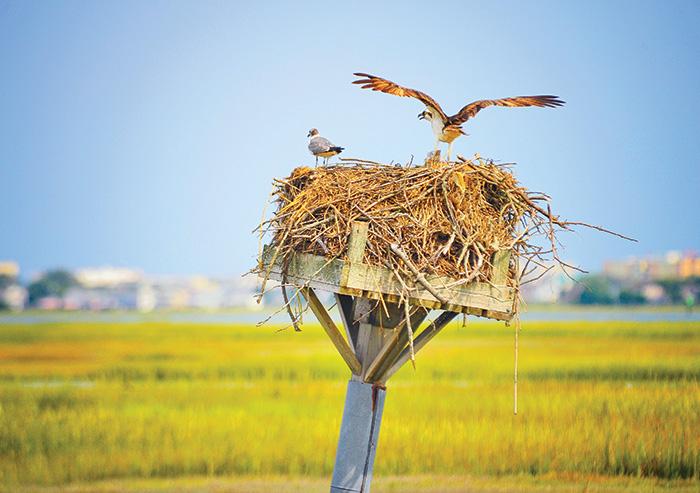
Ospreys nesting in Cape May County Wetlands

We asked two Bay birdwatching experts for their advice on best times and tips to enjoy birding either while on the Ferry or the shores of the Delaware Bay. Thanks to Scott Barnes who oversees the NJ Audubon’s Young Birds Club, and Bill Stewart, Director of Conservation & Community for the American Birding Association in Delaware for their insights.

Q: What type of birds are people most likely to see on the Bay?

Stewart: During the spring and summer months, keep a look out for Parasitic Jaegers, a falcon-like open water bird that loves to chase and steal food from other birds, hence their name! You will also see lots of gulls and terns following the ferry.

Barnes: Most often passengers will be looking at waterbirds – everything from loons to ducks, gulls and terns. From late fall through early spring there are often hundred of Red-throated Loons, Surf Scoters, and Black Scoters. Summertime months bring a variety of gulls with Laughing Gulls being the most numerous, but you can also spot Brown Pelicans and several varieties of terns.

Q: Are some birds more likely to be seen on the Ferry than on shore?

Barnes: In some years, the ferry can be a good place to search for Wilson’s Storm-Petrels and other “pelagic” species that don’t usually come close to land.  After strong storms with onshore winds, some lucky birders have seen shearwaters, another sea bird not often seen from land.

Stewart:The month of March is probably the most exciting with big and beautiful Gannets migrating north. It is common to see a few hundred near and directly following the Ferry. It’s very rare to see Gannets from land.

When most media outlets pay attention to Punxsutawney Phil to find out if spring in imminent, ferry folks pay attention to sightings of Gannets by the Ferry Captains. When ship logs take note of Gannets, the Ferry teams cheer and start to break out spring clothing!

Q: What is a good age to start birding?

Stewart: ANY AGE!!! The earlier the better, especially for hearing and listening for the birds.

Barnes: Whenever someone is interested. NJ Audubon does birding for tots on up.

Q: What are some good resources for local birders?

Barnes:  The NJ Audubon Young Birders Club, eBird from the Cornell Lab of Ornithology, and the NJ Birders Facebook Group.

Stewart: Only a few miles from each ferry terminal young birders can find the Cape May Bird Observatory in Cape May Point and the Nature Center at Cape Henlopen State Park. Both locations have a wealth of information on local bird happenings and many bird books to purchase.

Q: Are there specific programs for young birders?

Stewart: The American Birding Association hosts numerous young birder events, workshops, contests, mentoring opportunities and summer camps.  Once a year, our youth camp boards the Ferry to teach passengers about Delaware Bay birds. For more information, contact the American Birding Association in Delaware City, DE.

Barnes: The NJ Audubon young Birders Club runs birding trips year-round (about 1-2 trips/month) across the state. They are designed for kids ages 11-17 and their parents. We go to hotspots around the state from Cape May to the Delaware Water Gap.

Photo Credit: Special thanks to photographer Beate Pohlig of Cape May for sharing the header photo taken March 2018 during an early spring birdwatching expedition that took her across the bay on the Ferry.

Finding Solace in Spring Break Travel

Putting the 'Break' in Spring Break 

When planning Spring Break vacations, students, families and 9-to-5’ers alike find themselves packing their bags and driving south to soak in some Vitamin D. While mapping out your adventure, keep in mind what Spring Break is all about—relaxation and escaping the winter doldrums. Be sure to make time for pit stops to relax and stretch your legs, grab a bite to eat, and (if you’re lucky) enjoy a view that doesn’t include the highway. This can be easier said than done as you travel south through the Mid-Atlantic region, home to some of the most congested highways around the Philadelphia, Baltimore and DC region.

The solution: take the scenic route. 

Consider taking the Ferry, which offers reduced Spring Fare rates through May 31. The 85-minute escape across the Delaware Bay between Cape May, NJ and Lewes, DE allows you to bypass crowded roadways, park the car, and catch fresh spring breezes. If the air still has a chill, you and your crew can duck inside for warm on-board refreshments while still spotting Gannets, the Delaware Bay bird also considered the harbinger of spring.

Image
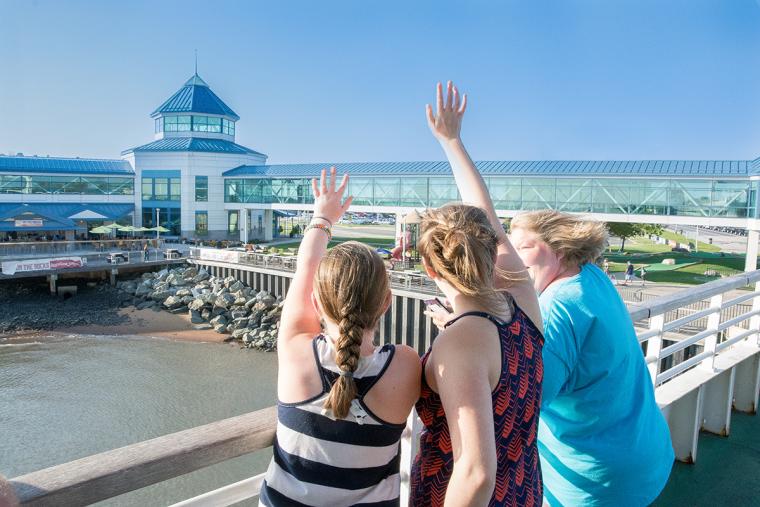
Family friendly travel aboard the Cape May Lewes Ferry

Popular Spring Break Destinations

Some popular Spring Break destinations Ferry passengers often travel to when heading south include:

Spring Break means different things to different people. College students view it as a time to let loose at popular beach resorts. Secondary school students often are just happy to be out of school, but parents frequently save their precious time off to use for an annual family vacation to warmer weather.

Increasingly, families are again taking to the roads to save money for spending at their final destination instead of on airfare. The Ferry is a great gateway to start the vacation experience early while still on the road, putting the entire family in vacation spirits well before they’ve hit the warmer climates.

Check Out The Latest Edition of the Twin Capes Traveller!

Sea Life Seen From the Ferry

Local Sea Life You Can Spot While on a Ferry Ride

The diversity of wildlife in the Delaware Bay is amazing, but it can be difficult to get close enough view to spot many of them from the shore. Luckily, from the decks of the Cape May – Lewes Ferry you can experience a 360-degree view of much of the marine life it has to offer!

Many of the more common dolphins can be seen through several seasons, and though not quite as common an occurrence as dolphins, whales can often be spotted as they travel up and down the coast during migration seasons. In fact, Conde Nast recently ranked Cape May as one of the best spots in the US for whale watching, so make sure to keep your eyes peeled! Additionally, it’s not unusual to spot seals resting on shoals during the winter.

Regardless of when you’re traveling, be sure to keep your eyes on the water, but don’t worry too much that you’ll miss anything. The captain and crew always have their eyes out for local whales and dolphins and make loudspeaker announcements to let you know when they appear, and where on the boat you can get the best view.  Although our ferries have a set course, it’s not unusual for a captain to slow the boat, or take a slight detour to let passengers get a more spectacular view.

Here’s a quick rundown of some of the sea life you’re likely to see on the Bay. But, if birds are more your cup of tea, be sure to check out our tips for birdwatching from the Ferry.

Seals

Image
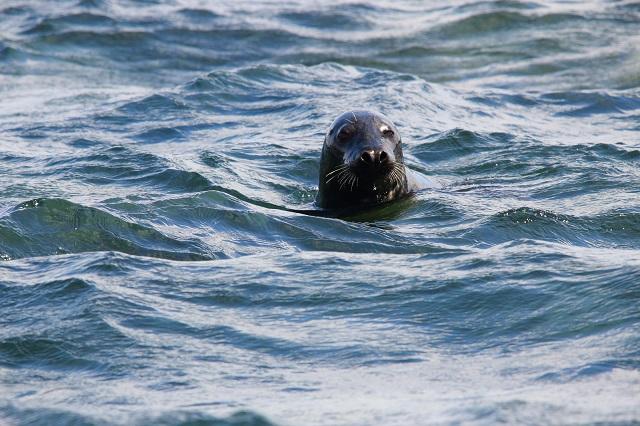
Delaware Bay Seals seen from the Cape May Lewes Ferry

There are three different types of seals in the Delaware Bay: Gray Seals, Harp Seals, and Harbor Seals. The Delaware Bay remains a popular site for seals to migrate during the winter. The most popular time to see seals along the Delaware Bay is during the colder months. Seals usually come out of the water to rest after they have eaten. If you catch sight of one of these amazing mammals, contact Marine Education, Research and Rehabilitation at 302-228-5029.

Gray Seals: These seals can grow to be up to 10 feet long and 800 pounds! They are gray in color, although pups have white fur for the first three weeks of their lives.

Harp Seals: Adults range between 5 to 6 feet and can weigh up to 300 pounds. They eat small fish and migrate towards the arctic during the summer months.

Harbor Seals: Adults are about 6 feet and weigh over 200 pounds. They are blue-grey in color. These seals love to be on land, and will typically give birth to baby seals during the spring and summer months.

For more information, visit the MERR Institute.

Dolphins

Image
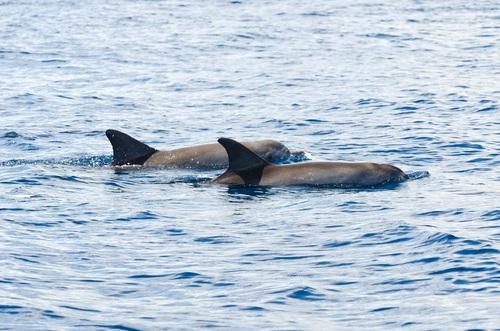
Dolphins swimming in the Delaware Bay

The most popular times to see dolphins are during the spring and summer months. They are gray in color and easy to spot from the deck. There are 43 species of dolphins that are recognized. In the Delaware Bay, we typically see 8 species of dolphins including the Atlantic Bottlenose, Striped, and Atlantic White-Sided.

For pictures and more information on each species click here.

Dolphins are incredibly friendly, intelligent and can live as long as 60 years! When dolphins sleep, half of their brain stays awake to keep them breathing so they don’t drown. Their diet usually consists of fish, squid, and crustaceans. Generally, mating season is in the spring and result in mothers giving birth to one calf. Each calf stays with their mother for the first three years of its life.

Fun Fact: Dolphins tend to leap out of the water to glance at their surroundings and even follow ships! So be on the lookout next time you’re aboard!

Whales

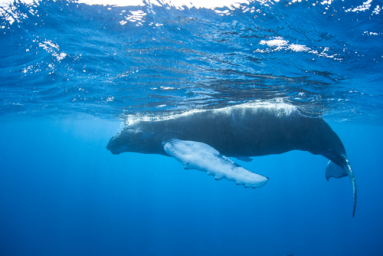
Image
A whale swims under water

Thar she blows! The Cape May-Lewes Ferry captains have been keeping their eyes peeled for whales in the Delaware Bay since we started sailing back in 1964, and Conde Nast recently rated Cape May, NJ as one of the Best Spots for Whale Watching in the US! Whales have a very large appetite and prefer smaller fish and krill for their meals and tend to swallow their prey whole. They tend to eat 4% of their body weight, with the smallest species of whales weighing 3,000 pounds that’s a lot of food!

Travel Tip: Get a Wildlife Card

When on board ask the crew for a free wildlife spotting card, or baseball card of local favorites.

DOLPHINS & WHALES

OH THE THINGS YOU'LL SEE

Romance on the Delaware Bay

Love is in the Air

From first dates to proposals, rehearsal dinners and weddings, the Ferry continues to be a favorite backdrop for creating romantic memories. It may be the sunsets or just the allure of the boardwalk, but romance is definitely always in the air at the Cape May-Lewes Ferry.

The ferry has connected many singles on their first dates when they find that an acceptable radius of 25 miles for a date in most online services brings up potential partners across the Bay.  A 17-mile ferry ride more than meets the criteria, and the need to catch the ferry home makes it easy-to-end the date even when it’s going oh-so-well.

She said "yes" when he proposed on the ferry
(She said “yes” when he proposed on the Ferry)

Singles groups have chosen to book roundtrip evening rides just to have a change of scenery while socializing, but it’s more common to encounter couples reuniting at each terminal as one partner or the other comes across for a long awaited visit.

Many a hopeful groom has chosen the ferry ride as the preferred place to propose. To date, as far as we know, every proposal on the ferry has resulted in a “yes” response!  


Insider’s Tip: If you let Customer Service know that a proposal is being planned when making a reservation, special add-ons frequently appear during the ride, from the captain calling the groom to the bridge for some pretense, to souvenir hats and glasses of champagne. Everyone on the ferry loves a good romance.


One special love story captured by the husband and wife Beard Photography team tells the tale of Laura from New Jersey and Jeremy from Delaware. The cross bay dating soon led to a shared home and blended family. When they decided to officially tie the knot, the photographer knew their engagement photos had to be on the ferry.

Romantic Backdrops Set the Stage

The Delaware Bay is also known for providing backdrops for keeping the romance alive years after presents have been opened and the guests dispersed. Couples frequently take the ferry for an evening or weekend away on the other side to relax at day spas, take wine and ale trails in the sister state, experience the culinary delights at area restaurants, or just turn off phones while relaxing at some of the best hotels in Lewes and Cape May.

For shorter dates, couples tell us they love the  sunset wine cruises on the Ferry during summer evenings to indoor winter wine and beer dinners at the terminals special events have helped couples celebrate everything from retirements to new jobs and romantic evenings away from the kids. Romantic options on the bay are almost limitless for both the young and still young-at-heart.  Even when surrounded by water, it’s clear that sparks fly on the Delaware Bay as Love is Always in the Air!

Check Out The Latest Edition of the Twin Capes Traveller!

Search in CMLF

Cape May Lewes Ferry

Subscribe to our newsletter

Booking Form