10 Facts About The NJ Coast Guard

New Jersey has a long history and special relationship with the Coast Guard. It’s one reason Cape May County was designated as a Coast Guard Community in 2015. 

Check out these 9 other milestones that give the U.S. Coast Guard a special place in New Jersey’s heart:

  1. Federally funded life-saving stations graced Cape May County’s shores as early as 1849. Some of these, including Ocean City’s 1885 Life Saving Station 30, are still standing and operate as museums or civic buildings.
  2. The first permanent Coast Guard Air Station was in Cape May in 1926.
  3. In the 1920s, the Coast Guard patrolled the waters of the Jersey coast to foil rumrunners during Prohibition.
  4. During World War II, the Coast Guard Mounted Beach Patrol rode the beaches of Cape May County’s barrier islands on horseback, as well as walked the sandy stretches with German Shepherds to watch for German U-boats.
  5. The only Coast Guard Uniform Distribution Center is located in Woodbine, NJ in Cape May County. The Center ships uniforms, medals, ribbons and accessories all over the world.
  6. Sewell’s Point, the large expanse of oceanfront land where the 350-acre TRACEN (training center) is now located, was once the site of an amusement park, and was a facility shared with the U.S Navy form 1924-1946.
  7. The World War II-era Cutter Tamaroa, which played a key role in the rescue effort documented in The Perfect Storm was sunk in 2016 to help create an artificial barrier reef off the coast of Cape May. The site, about 30 miles off shore, was already home to other downed ships. 
  8. The oldest Coast Guard boat station is in Sandy Hook, NJ. 
  9. Air Station Atlantic City became operational in May 1998. Located at the William J. Hughes Federal Aviation Administration Tech Center at AC International Airport, the station serves as base to the orange USCG helicopters frequently seen along the South Jersey coastline and Delaware Bay. 

In August 2018, the Coast Guard is celebrating it’s 225th birthday.  For more facts of interest not always NJ-based, visit USO.org to see 25 facts for 225 years of Coast Guard history

Check Out The Latest Edition of the Twin Capes Traveller!

Cape May’s Deep Ties To The Coast Guard

A Proud Coast Guard Community

Cape May, New Jersey is known for many things; the Victorian homes in Cape May, sandy beaches and great restaurants, and being one of the world’s premier birdwatching destinations. Yet, it’s the area’s newest national honor that makes it most proud — A Coast Guard Community. 

The official county-wide designation was bestowed on May 8, 2015 and was one that involved a rigorous application process and approval by not only the U.S. Coast Guard but both houses of Congress. Only 18 cities and one other county have received the designation, which recognizes an above-and-beyond bond between the Coast Guard and the community. 

Cape May’s ties go back to the early 1800s when the Guard first established a presence with 12 Life Saving Stations in the area. That bond grew tighter after the establishment of the Training Center (TRACEN) on Sewell’s Point in 1948. And, since 1982, TRACEN has been the only USCG training facility for enlisted personnel in the country. That means that 80% of the current force have all gone through Cape May in their Coast Guard careers. 

TRACEN is the third largest employer in Cape May County, bringing in an estimated $174 million in direct and indirect revenue to the county. About 40,000 family and friends of graduating “Coasties” come to Cape May every year – year-round.  Many from the north drive down via the Garden State Parkway, while others more west fly into regional airports before driving, and those coming from the south frequently drive over via the Cape May-Lewes Ferry. 

Strong Community Connection

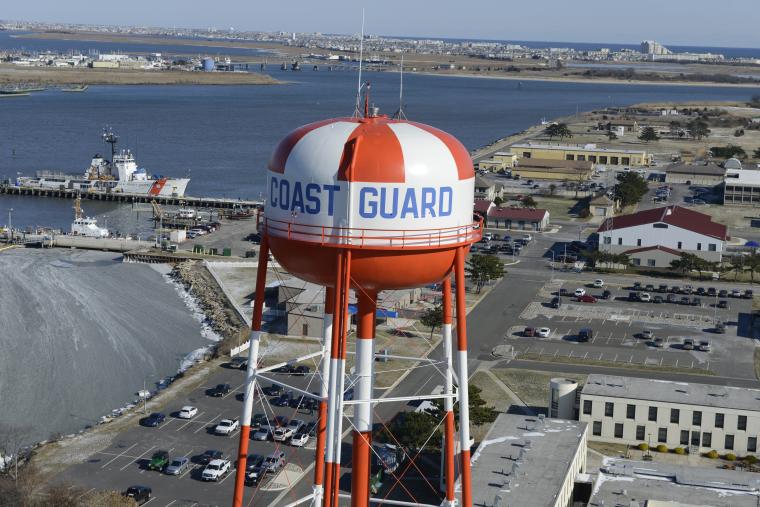
Aerial photo of the USCG water tower in Cape May, NJ

Members of the United States Coast Guard (USCG) and CG Auxiliary (a volunteer group) connect with the community in a variety of ways. Their biggest connection is through the Partnership in Education Program. In it, Guardsmen work directly with students both in and out of the classroom to heighten awareness of traditional Coast Guard values: drug-free lifestyle, emphasis on scholarship, personal initiative, responsibility and individual self-worth.

The Coast Guard also offers boating safety classes, helps with turtle hatching and other wildlife protection and rescue activities, offers tours of TRACEN to school groups and the public by reservation on weekends, presents Sunset Parades at the base open to the public, and helps at local events such as music festivals, Harborfest, and community parades. 

The connection to Cape May is far stronger for most Coasties than just memories of Boot Camp days. More than a few have fallen in love with locals, gotten married, bought houses, and settled down or retired here post active service. For instance, retired Coast Guard officer Tom Carroll and his wife Sue were pioneers in the B&B business in Cape May when they opened their first inn, the Main Stay, in 1972. They remain very active in the Mid-Atlantic Center for the Arts — so much so that the Carriage House Gallery on The Emlen Physick Estate was renamed The Carroll Gallery in their honor. 

Related Post:  10 NJ Facts About the Coast Guard

For their part, civilian community residents take considerable efforts to make the Guard — especially new recruits — feel at home. Every year, through Operation Fireside, more than 180 Cape May families open their homes to 500+ recruits for a traditional meal on Thanksgiving and Christmas while they are away from their own families and traditions. 

The Coast Guard Family Assistance Fund helps bring friends and family of graduating recruits to Cape May every week, often paying plane fares and, in cooperation with local hotels and motels, arranging for free or reduced-rate stays. 

Festival Opens TRACEN  To The Public

Since receiving the Coast Guard Community designation in 2015, signs have been distributed throughout the county so visitors in each municipality are greeted with blue signs announcing they’re entering “A Proud Coast Guard Community.”  The idea is that for all passers-by to clearly see the Coast Guard seal and be reminded about the significant USCG presence in the area. 

The annual Cape May Coast Guard Community Festival, held the first weekend in May, is an outgrowth of that designation. “The festival is an opportunity for the community to have access to TRACEN one day a year and learn more about the Coast Guard through ship tours, search and rescue demonstrations, guided trolley tours, and observing recruits during the day,” said Mike Couch, executive director of the Cape May County Community Foundation. 

The Foundation hopes to continue to grow the weekend festival into a longer event, but for now it starts with Friday night ceremonies, continues with the Saturday festival on base, and ends with closing ceremonies on Sunday.

For more information on the Community Foundation visit CoastGuardCommunity.org, or call 609-888-6120. Donations are always welcomed, but opportunities also exist for sponsorships of key events and programs, and volunteer positions to help organize and work the various events involved in the Festival. 

Marine Life Rescue Heroes

Saving Our Sea(Life) 

April 27 is the officially designated as Marine Mammal Rescue Day across the nation, but for two organizations on different sides of the Delaware Bay that mission is far more often than just one day a year. Both the MERR Institute in Lewes, Delaware and the Marine Mammal Stranding Center in Brigantine, NJ are on call 24/7 to provide emergency care to marine mammals injured in local waters.

The MERR (Marine Education, Research and Rehabilitation) Institute provides rescue and care for turtles, dolphins and other marine mammals who are injured or ill and found on Delaware’s beaches. If the animal is severely hurt, emergency transport is provided over to the New Jersey side to Brigantine’s Mammal Stranding Center. If schedules and time permits, MERR’s volunteers drive the injured mammals to NJ via the Cape May-Lewes Ferry. It’s a shorter trip with less traffic noise and road bumps to disturb the wounded animals. Once rehabilitated, it’s also common to see happier trips such as with the turtle above where NJ volunteers return animals via the Ferry to their native waters in Delaware and points farther south including Virginia, and Maryland.

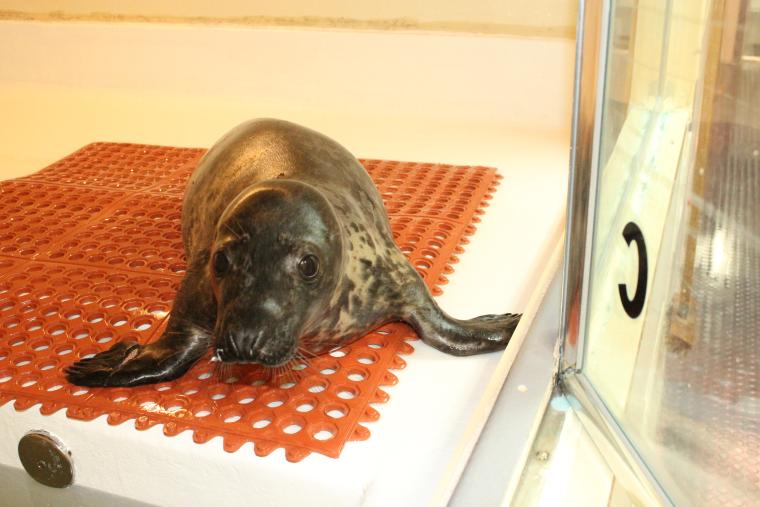
Seal rescued

According to MERR, accidents happen for many reasons – some natural and some man made. It’s far too common, particularly in the spring, to find a stranded seal with gashes that could occur from either shark attacks or run ins with propellers from private and commercial boats on the Bay.

Executive Director Suzanne Thurman notes that man made upsets can also occur on a much larger scale including recent initiatives to reinstate seismic testing for oil drilling on open waters on the eastern seaboard.  “Blasts could affect more than 36 species of marine mammals and sea turtles along Delaware’s small coastline,” Thurman stated. She added that blasts can cause everything from severe hearing loss to mothers inadvertently abandoning their young.

The Marine Mammal Stranding Center(MMSC) has been in operation for more than 40 years, having assisted in close 6,000 strandings of large whales to smaller sea turtles who have come ashore due to distress situations. Directed by Bob Schoelkopf for the entire 40-year period, the center is designed to care for animals found in New Jersey only, but whenever necessary has opened its doors and full facilities to animals from other states such as the MERR rescues. Animals have come to the center from the full length of the U.S. eastern coastline — Maine to Florida.

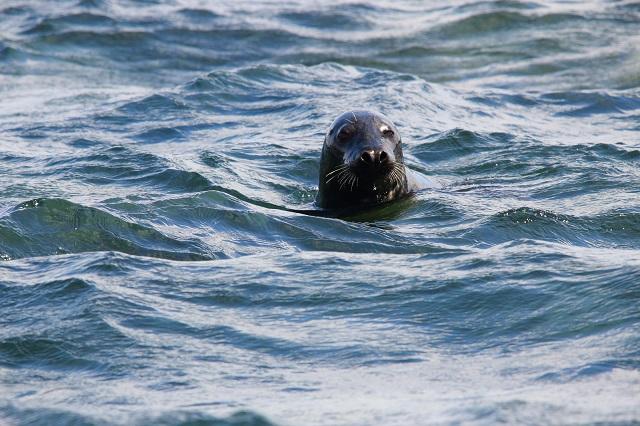
Delaware Bay Seals seen from the Cape May Lewes Ferry

The MMSC goal is to rehabilitate animals in a humane and efficient way to return them to the wild in the shortest possible time. In extreme situations Schoelkopf states, “When animals may not be released (such as a disability), every effort is made to secure a proper, enriching facility to provide lifetime care.”

When released, MMSC brings them as far north or south as possible to assist them on their way toward where they had been intending to go prior the incident that brought them into the facility for rehabilitation. In the case of the harbor seal shown above, she was picked up in Delaware in the spring, transported to MMSC, was undergoing rehabilitation in the ICU unit, and would be scheduled to transfer to a pool  for strengthening and exercise after being cleared by a veterinarian. Ideally, she would then be transported to Sandy Hook, NJ in early summer to allow her intended migration north to cooler waters for the summer.

All marine mammals are federally protected and only organizations such as MERR and MMSC are authorized to pick up and handle the animals. When animals are stranded, both groups recommend that people do not approach the hurt mammals, but instead immediately call for assistance. Because these animals are wild, they can bite or cause more harm to both the person trying to assist as well as themselves.  This recommendation also holds for deceased mammals that wash up on NJ and DE shores to allow the marine rescue teams to do clean necropsies and better understand issues affecting marine health in our local waters.

Both organizations are committed to ongoing research and public education on conservation and marine life issues on our coastal waterways. Many of the animals are endangered species, and both organizations are strongly committed to ongoing stewardship of the Bay, inland water and ocean habitats common to both states.

Volunteers are always needed to help with transporting and rescue duties and both organizations are supported by memberships and sponsor donations.

For more information:  

 MERR
Web sitewww.merrinstitute.org
Facebookhttps://www.facebook.com/MERRInstitute/
Phone302-228-5029
E-mailmerrinstitute@gmail.com
 MMSC
Web sitehttps://mmsc.org
Facebookhttps://www.facebook.com/njmarinemammal/
Phone609-266-0538
E-mailinfo@mmsc.org

Check Out The Latest Edition of the Twin Capes Traveller!

Year-Round Birdwatching on the Cape May–Lewes Ferry

What Expert Birdwatchers Look for Year-Round 

The Delaware Bay is a unique habitat providing a wealth of birdwatching opportunities. But what are you likely to see?

Image
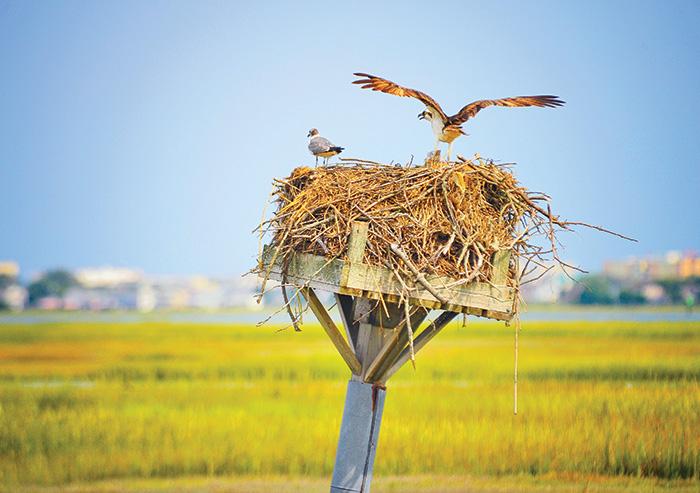
Ospreys nesting in Cape May County Wetlands

We asked two Bay birdwatching experts for their advice on best times and tips to enjoy birding either while on the Ferry or the shores of the Delaware Bay. Thanks to Scott Barnes who oversees the NJ Audubon’s Young Birds Club, and Bill Stewart, Director of Conservation & Community for the American Birding Association in Delaware for their insights.

Q: What type of birds are people most likely to see on the Bay?

Stewart: During the spring and summer months, keep a look out for Parasitic Jaegers, a falcon-like open water bird that loves to chase and steal food from other birds, hence their name! You will also see lots of gulls and terns following the ferry.

Barnes: Most often passengers will be looking at waterbirds – everything from loons to ducks, gulls and terns. From late fall through early spring there are often hundred of Red-throated Loons, Surf Scoters, and Black Scoters. Summertime months bring a variety of gulls with Laughing Gulls being the most numerous, but you can also spot Brown Pelicans and several varieties of terns.

Q: Are some birds more likely to be seen on the Ferry than on shore?

Barnes: In some years, the ferry can be a good place to search for Wilson’s Storm-Petrels and other “pelagic” species that don’t usually come close to land.  After strong storms with onshore winds, some lucky birders have seen shearwaters, another sea bird not often seen from land.

Stewart:The month of March is probably the most exciting with big and beautiful Gannets migrating north. It is common to see a few hundred near and directly following the Ferry. It’s very rare to see Gannets from land.

When most media outlets pay attention to Punxsutawney Phil to find out if spring in imminent, ferry folks pay attention to sightings of Gannets by the Ferry Captains. When ship logs take note of Gannets, the Ferry teams cheer and start to break out spring clothing!

Q: What is a good age to start birding?

Stewart: ANY AGE!!! The earlier the better, especially for hearing and listening for the birds.

Barnes: Whenever someone is interested. NJ Audubon does birding for tots on up.

Q: What are some good resources for local birders?

Barnes:  The NJ Audubon Young Birders Club, eBird from the Cornell Lab of Ornithology, and the NJ Birders Facebook Group.

Stewart: Only a few miles from each ferry terminal young birders can find the Cape May Bird Observatory in Cape May Point and the Nature Center at Cape Henlopen State Park. Both locations have a wealth of information on local bird happenings and many bird books to purchase.

Q: Are there specific programs for young birders?

Stewart: The American Birding Association hosts numerous young birder events, workshops, contests, mentoring opportunities and summer camps.  Once a year, our youth camp boards the Ferry to teach passengers about Delaware Bay birds. For more information, contact the American Birding Association in Delaware City, DE.

Barnes: The NJ Audubon young Birders Club runs birding trips year-round (about 1-2 trips/month) across the state. They are designed for kids ages 11-17 and their parents. We go to hotspots around the state from Cape May to the Delaware Water Gap.

Photo Credit: Special thanks to photographer Beate Pohlig of Cape May for sharing the header photo taken March 2018 during an early spring birdwatching expedition that took her across the bay on the Ferry.

Cape May’s Only Victorian House Museum

A Visit Back in Time to the Emlen Physick Estate

Cape May is known for many historic sites that you just can’t see anywhere else in the world, the Emlen Physick Estate being one of them. Now a Victorian house museum operated by the Mid-Atlantic Center for the Arts, the estate transports you through time to see how a wealthy Victorian household operated and what they would do for entertainment.

Image
Tea set at the historic Emlen Physick Estate house museum

History of the Physick Family

Emlen Physick, Jr. (1855-1916) was a trained physician from a short, but successful line of physicians dating back to the 1700s. His Philadelphia-based grandfather Philip Syng Physick (1768-1837) was considered the father of American surgery, working alongside Benjamin Rush and many other well-known American founders. The name Emlen stems from his grandmother, Elizabeth Emlen, who passed it down to her son as his first name and then the grandson for whom the estate is now named.

Unlike his forebears, Emlen, Jr. did not take to medicine. After his fathers death, Emlen Jr. came into an extremely large sum of money, completed his education in med school, then retired before his medical career ever began. With his new large estate built by Frank Furness, Emlen Jr. assumed the life of a gentleman farmer, meaning he spent many hours with his beloved dogs while the paid servants did the heavy lifting on the farm.

The estate is the reason for the formation of the Mid-Atlantic Center for the Arts and Humanities, as the estate was about to be destroyed after years of neglect and graffiti. This was an eye-opener, and people in Cape May realized important pieces of history like this and the Cape May Lighthouse need to be preserved. It was then that the MAC was formed, renovating the estate with some TLC, and transforming it into a fun tour about the lives of the wealthy of the Victorian era.

Image
Sample of Physick Estate Wall Coverings

Touring The Estate

On the tour, you’ll be transported back to the 1800s and stand in awe of the Francis Furness architecture (considered an inspiration to Frank Lloyd Wright), stunning wall papers, and overall room designs that more than stand the test of time. Modern day home owners would easily want the sculpted fire places, wood screenings, and large farmhouse doors in their homes today.

The engaging and passionate tour guides give you an insider’s view on the lifestyles of the Physicks, the importance of the African American population in maintaining much of the history that’s been restored to the estate, and the credence of local ghost stories. For more information, visit the Emlen Physick Estate web site. Of course, the best way to experience history is firsthand and touring the estate for yourself!

Getting There from The Ferry

Take the Cape May-Lewes Ferry over from Lewes, Delaware to North Cape May, NJ.  Although the estate is only 10 minutes from the Ferry, if it’s the summer season, ask the Ferry booking team about trolley tours leaving directly from the Ferry terminal.

If you’re arriving any time of the year by car drive down Ferry Road, cross into Cape May following Rt. 109.  Soon after you cross the bridge into Cape May, take a left on Sydney Ave. and then take a right on to Washington Ave. The estate is on your left with parking behind The Carriage House.

Check Out The Latest Edition of the Twin Capes Traveller!

Finding Solace in Spring Break Travel

Putting the 'Break' in Spring Break 

When planning Spring Break vacations, students, families and 9-to-5’ers alike find themselves packing their bags and driving south to soak in some Vitamin D. While mapping out your adventure, keep in mind what Spring Break is all about—relaxation and escaping the winter doldrums. Be sure to make time for pit stops to relax and stretch your legs, grab a bite to eat, and (if you’re lucky) enjoy a view that doesn’t include the highway. This can be easier said than done as you travel south through the Mid-Atlantic region, home to some of the most congested highways around the Philadelphia, Baltimore and DC region.

The solution: take the scenic route. 

Consider taking the Ferry, which offers reduced Spring Fare rates through May 31. The 85-minute escape across the Delaware Bay between Cape May, NJ and Lewes, DE allows you to bypass crowded roadways, park the car, and catch fresh spring breezes. If the air still has a chill, you and your crew can duck inside for warm on-board refreshments while still spotting Gannets, the Delaware Bay bird also considered the harbinger of spring.

Image
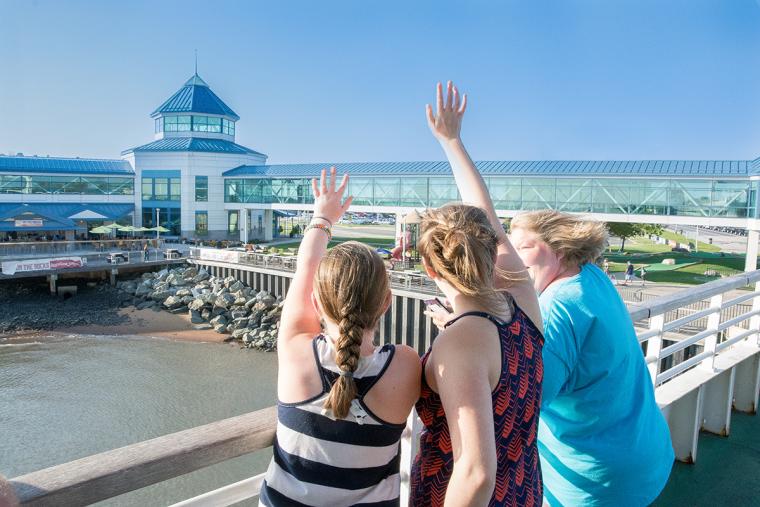
Family friendly travel aboard the Cape May Lewes Ferry

Popular Spring Break Destinations

Some popular Spring Break destinations Ferry passengers often travel to when heading south include:

Spring Break means different things to different people. College students view it as a time to let loose at popular beach resorts. Secondary school students often are just happy to be out of school, but parents frequently save their precious time off to use for an annual family vacation to warmer weather.

Increasingly, families are again taking to the roads to save money for spending at their final destination instead of on airfare. The Ferry is a great gateway to start the vacation experience early while still on the road, putting the entire family in vacation spirits well before they’ve hit the warmer climates.

Check Out The Latest Edition of the Twin Capes Traveller!

Top 7 Sojourns for Snowbirds Heading North

Ways to Enjoy the Journey: Cape May & Lewes Travel Stops

As the weather warms up, snowbirds who have headed south for winter begin to once again venture north. For many, the Ferry is a welcomed mid-point to relax and restore energy with a variety of waterside activities. There are plenty of opportunities for rejuvenation in the Lewes and Cape May areas—below we’ve outlined some of our top recommendations.

Lewes

Embrace History

Embrace the history of our nation’s first state by touring the Ryves Holt House, the oldest standing structure in Delaware, built in 1665 by Dutch settlers. Today the house is home to the Lewes Historical Society and part of the First State National Park.

Parks & Trails

A five-mile trail perfect for a bike, hike or stroll, the Junction and Breakwater Trail winds through forests and open fields along a former section of the Penn Central Railroad between Lewes and Rehoboth Beach. Or explore nearby Cape Henlopen’s three-mile trail looping around the park and experience the scenic landscape and history by climbing to the top of the WWII Observation Tower.

Shopping

A short bike or car ride from Lewes, Rehoboth is home to some of the region’s best shopping, including three Tanger Outlet Centers as well as boutique shopping downtown. Even better, all stores are tax-free!

Cape May

Home Tours

America’s first seaside resort, Cape May has one of the largest collections of late 19th-century frame buildings left in the U.S. and more than 600 Victorian era homes. Take a private guided tour or trolley tour throughout Cape May’s Historic District.

Cuisine

A trip to Cape May wouldn’t be complete without savoring the local coastal cuisine. Take a walking food tour to experience multiple restaurants, local culture, sights, and stories. Or for a romantic feel, stay at the Peter Shields Inn, a romantic seaside getaway, with nine guest rooms, breathtaking oceanfront views, and gourmet dining.

Spas

Relax and rejuvenate from your travels at Spa at Congress Hall or the Cape May Day Spa. Or bring a luxurious spa experience to you by requesting in-room spa service at one of the many B&Bs located in town.

Check Out The Latest Edition of the Twin Capes Traveller!

Motorcycles Take Rt. 9 To Sea Level

Motorcyclists Rev It Up Year-Round!

The Ferry welcomes motorcyclists year-round—even during harsh weather conditions—as a way to escape, relieve stress and enjoy the freedom that riding a motorcycle offers. From choppers to cruisers, sport bikes to slingshots, it’s not unusual to spot at least one motorcycle and frequently more on any departure.

The most popular months for motorcyclists on the Ferry are the warm weather months of May through September.  Insider tip: These dates sell out quickly so although reservations are never required, they are highly recommended especially for the September boats. Here’s a quick run down of some of the most popular motorcycle times at the Ferry.

  • The season usually begins with the Rolling Thunder “Ride for Freedom”  in Washington D.C. each May, with the Ferry giving long voyage riders a great respite en route to supporting the nation’s veterans.
  • In June 2018, other groups start appearing including the Mid-Atlantic Women’s Motorcycle Rally and other longer charity tours.
  • Early September is usually time for the Roar to the Shore event at The Wildwoods, NJ  where attendees enjoy the Boardwalk and Beach as much as the town-wide rally.
  • Each September, special “motorcycle only” boats are scheduled to create camaraderie on the water for those attending Bike Week in Ocean City, MD.
  • Finally, each October, in honor of National Motorcycle Ride Day (second Saturday in October), the Ferry takes the celebration one step further offering the special motorcycle group rate to any one cyclist all month long!

Group Rates Always in Effect

Group of motorcyclists gets ready to board the Cape-May-Lewes Ferry

The Ferry is popular with many couple cyclists en route as part of a romantic get-away.  One couple takes an annual trip to the same beach sanctuary each August for time to recharge and reconnect their own batteries. More frequently, we’ll see groups of 4-12 riders headed either to a weekend event at a shore town, or participating in a longer charity event.

As of 2018, the motorcycle group rate was improved and available to groups of 12 passengers rather than the prior 25. At various times of the year, special group rates are also extended to groups of 8 cycles.  To inquire about reduced group rates check out our Group Specials page, or call 1-800-643-3779.

Ride The Water On Rt 9

A little-known fact is that the Cape May-Lewes Ferry is one of only two Ferry systems nationwide that connects a U.S. Highway via a water route. The Ferry travels along U.S. Route 9, the scenic north-south route from New York to Delaware. Riders can’t claim to have traveled all of Route 9 until they have taken the Ferry and ridden the route on sea level!  If you do the route, make sure to ask for your special pin noting that you’ve done Route 9 not only the traditional way on land, but also the road less traveled on water!

Year-Round Excursions

Image
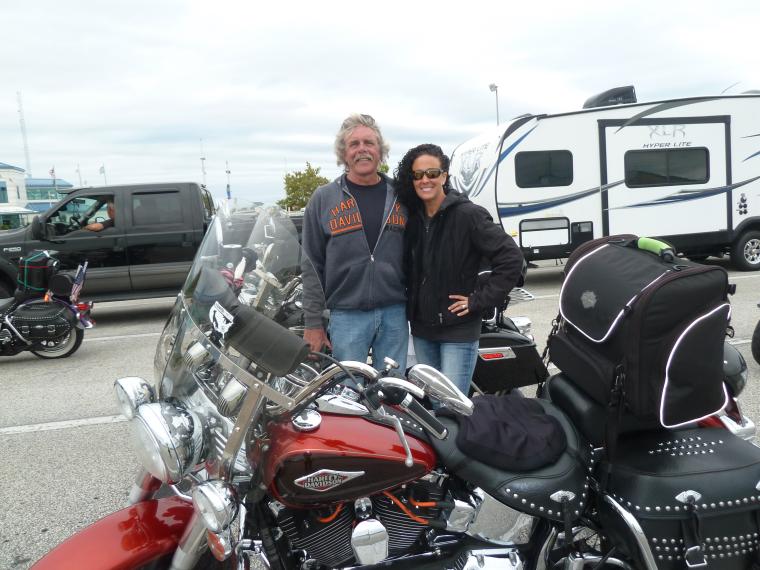
motorcycle couple waiting to board Cape May Lewes Ferry

When the weather cools off, that doesn’t mean motorcycling has  to as well. Some of the most beautiful scenery around the Delaware and New Jersey coasts occur in the Fall months when the foliage changes colors. Wintertime is prime season for bird watching from the Ferry as the Delaware Bay is home to a variety of birds. And the indoor heated galleys on the ferries, give cyclists a great way to warm up for the continued ride ahead regardless of their final destination.

Motorcycle rates on the ferry vary by season with the winter and spring with seasonal rates varying from 12-38% peak summer fares. In addition, groups of 25 motorcycles or more qualify for special group rates.  For info on group excursion rates, call 1-800-643-3779 to inquire about group deals.

Whether you’re a lone rider, or have a club looking for a unique excursion, the Ferry is a fun alternative to the standard blue highways ride. There are great day trips on either side of the bay from jazz and music festivals on the Cape May side  to NASCAR and tax free shopping on the Lewes side. We hope to see you rolling through our tolls soon so we can wish you a smooth ride with a smooth sail!

Check Out The Latest Edition of the Twin Capes Traveller!

Ideas For a Ferry Happy Valentine’s Day

Valentine's Day Around the Delaware Bay

What better way to spend Valentine’s Day than on the Delaware Bay! Plan your getaway with us and experience amazing opportunities available in both Cape May and Lewes. Escape your busy work schedule and take time to relax and enjoy some alone time with the one you love.

New Jersey Destinations

Hawk Haven Vineyard & Winery

Image
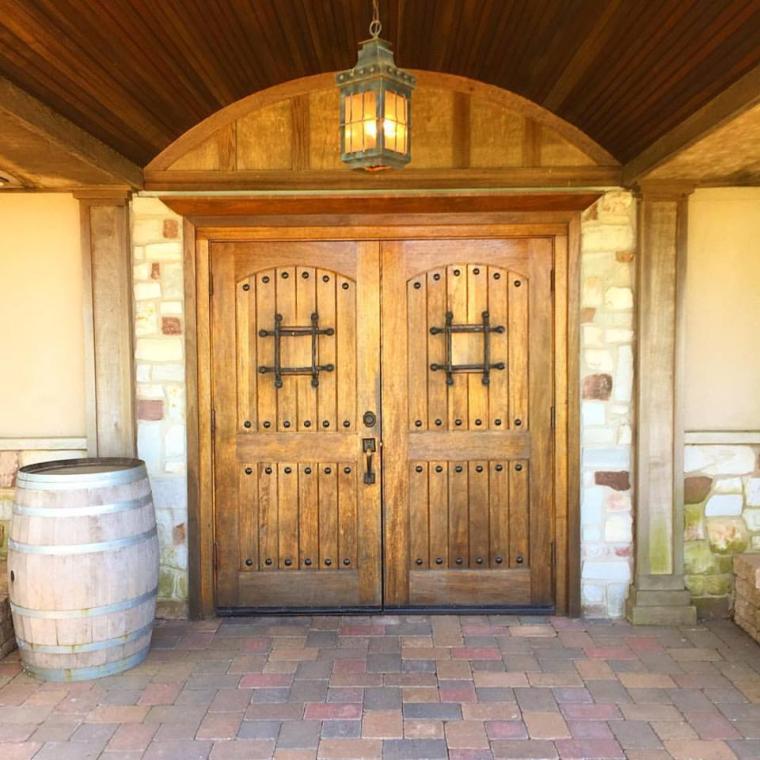
Hawk Haven doors

Looking for a fun and festive way to celebrate Valentine’s Day? Bring your sweetheart to romantic Hawk Haven Vineyard & Winery for an afternoon of adventure! You’ll be able to sip wines, taste organic chocolate and listen to live music all while supporting local wine growers. For more information, visit their website.

The Ebbitt Room

Image
Romantic candle-lit dinner at Ebbitt Room

Share a romantic evening with someone special at the Ebbitt Room this Valentine’s Day! Located on Jackson Street in Cape May, the Ebbitt room is rooted in a farm-to-table and farm-to-glass dining philosophy featuring fresh ingredients from their very own Beach Plum Farm. A special Valentine’s menu will be offered, visit the Cape Resorts website for more information and to make your reservation!

Cape May Brewing Co.

They say you can’t buy love, but luckily you can buy beer. And at CMBC’s Take A Bite Out of Love, Valentine’s Day Bash, you can have both! They’ll have all kinds of fun and games, sweets for your sweet, special Valentine’s-inspired pint glasses, a featured Lover’s Flight of some incredible CMBC beers, and much more.

Delaware Destinations

The Inn at Canal Square

Image
View of the beach in Delaware

The Inn at Canal Square is just a short drive from our terminal and is in the heart of historic Lewes, DE. Facing the Lewes Canal, guests have an amazing seaside view when they wake up. While in Lewes, you and your loved one can explore historic museums, enjoy unique shops downtown and dine at one-of-a-kind restaurants. No matter your interest, their 22 beautifully decorated rooms turn any weekend into a romantic retreat. For more information about the Inn at the Canal Square, give them a call at (302) 644-3377, or visit their website.

The Avenue Inn and Spa

Located right in the heart of downtown Rehoboth, this inn and spa offers special couple packages including message therapy, facial treatments and more! Their staff is dedicated to educating clients on a healthier and better lifestyle by using all natural products. Their top notch amenities provide guests with complimentary breakfast as well as cheese and wine. Their luxurious rooms are perfect for you and your loved one to obtain optimal relaxation. To learn more about The Avenue Inn, you can reach them at (302) 226-2900, or check out their website.

For more Delaware and New Jersey fun check out our travel inspiration page including wineries, breweries, shopping and historic treasures.

Sea Life Seen From the Ferry

Local Sea Life You Can Spot While on a Ferry Ride

The diversity of wildlife in the Delaware Bay is amazing, but it can be difficult to get close enough view to spot many of them from the shore. Luckily, from the decks of the Cape May – Lewes Ferry you can experience a 360-degree view of much of the marine life it has to offer!

Many of the more common dolphins can be seen through several seasons, and though not quite as common an occurrence as dolphins, whales can often be spotted as they travel up and down the coast during migration seasons. In fact, Conde Nast recently ranked Cape May as one of the best spots in the US for whale watching, so make sure to keep your eyes peeled! Additionally, it’s not unusual to spot seals resting on shoals during the winter.

Regardless of when you’re traveling, be sure to keep your eyes on the water, but don’t worry too much that you’ll miss anything. The captain and crew always have their eyes out for local whales and dolphins and make loudspeaker announcements to let you know when they appear, and where on the boat you can get the best view.  Although our ferries have a set course, it’s not unusual for a captain to slow the boat, or take a slight detour to let passengers get a more spectacular view.

Here’s a quick rundown of some of the sea life you’re likely to see on the Bay. But, if birds are more your cup of tea, be sure to check out our tips for birdwatching from the Ferry.

Seals

Image
Delaware Bay Seals seen from the Cape May Lewes Ferry

There are three different types of seals in the Delaware Bay: Gray Seals, Harp Seals, and Harbor Seals. The Delaware Bay remains a popular site for seals to migrate during the winter. The most popular time to see seals along the Delaware Bay is during the colder months. Seals usually come out of the water to rest after they have eaten. If you catch sight of one of these amazing mammals, contact Marine Education, Research and Rehabilitation at 302-228-5029.

Gray Seals: These seals can grow to be up to 10 feet long and 800 pounds! They are gray in color, although pups have white fur for the first three weeks of their lives.

Harp Seals: Adults range between 5 to 6 feet and can weigh up to 300 pounds. They eat small fish and migrate towards the arctic during the summer months.

Harbor Seals: Adults are about 6 feet and weigh over 200 pounds. They are blue-grey in color. These seals love to be on land, and will typically give birth to baby seals during the spring and summer months.

For more information, visit the MERR Institute.

Dolphins

Image
Dolphins swimming in the Delaware Bay

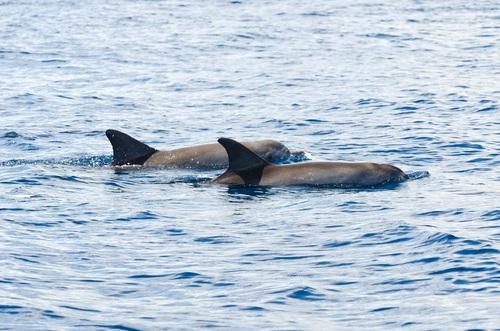
The most popular times to see dolphins are during the spring and summer months. They are gray in color and easy to spot from the deck. There are 43 species of dolphins that are recognized. In the Delaware Bay, we typically see 8 species of dolphins including the Atlantic Bottlenose, Striped, and Atlantic White-Sided.

For pictures and more information on each species click here.

Dolphins are incredibly friendly, intelligent and can live as long as 60 years! When dolphins sleep, half of their brain stays awake to keep them breathing so they don’t drown. Their diet usually consists of fish, squid, and crustaceans. Generally, mating season is in the spring and result in mothers giving birth to one calf. Each calf stays with their mother for the first three years of its life.

Fun Fact: Dolphins tend to leap out of the water to glance at their surroundings and even follow ships! So be on the lookout next time you’re aboard!

Whales

Image
A whale swims under water

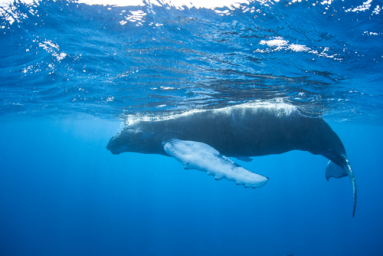
Thar she blows! The Cape May-Lewes Ferry captains have been keeping their eyes peeled for whales in the Delaware Bay since we started sailing back in 1964, and Conde Nast recently rated Cape May, NJ as one of the Best Spots for Whale Watching in the US! Whales have a very large appetite and prefer smaller fish and krill for their meals and tend to swallow their prey whole. They tend to eat 4% of their body weight, with the smallest species of whales weighing 3,000 pounds that’s a lot of food!

Travel Tip: Get a Wildlife Card

When on board ask the crew for a free wildlife spotting card, or baseball card of local favorites.

DOLPHINS & WHALES

OH THE THINGS YOU'LL SEE

Search in CMLF

Cape May Lewes Ferry

Subscribe to our newsletter

Booking Form